
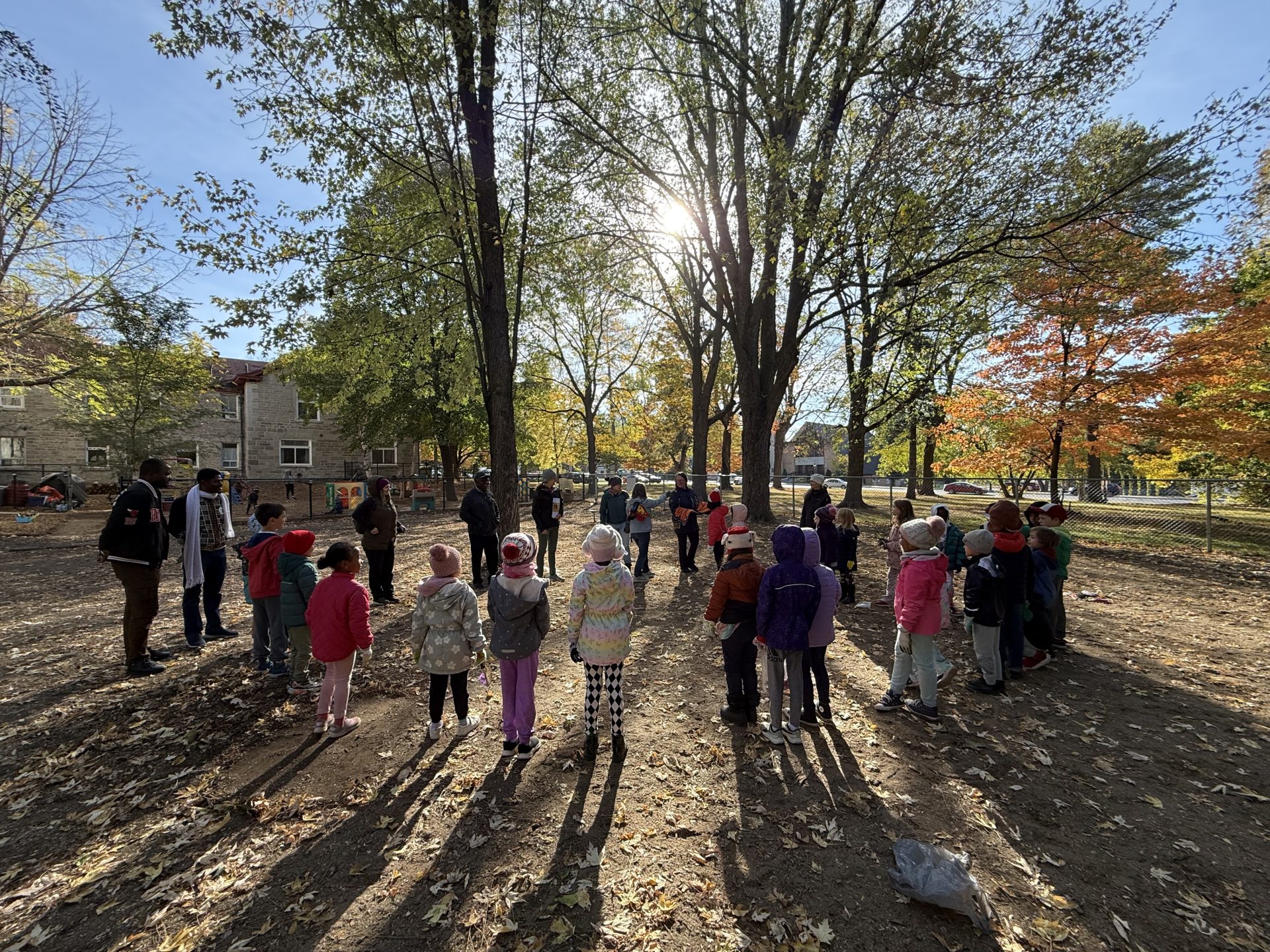

Before the stars aligned and before we met, it was as if we were working within our own realms in tandem, with the same ultimate values and goals guiding us.
On my end, it began with my family’s sharing of willow cuttings with our sons’ school, École Montessori de l’Outaouais. It was a quick project thought up on a whim that was completed in two days. The total cost of the project was less than $2000 for wood, equipment to dig a trench and help from one contractor. The rest was done by friends or parents who saw us working and jumped in to give a hand, to transport the willows, build a wooden frame and help us to plant the cuttings. The result was an instant green buffer between the school and parking lot. The water loving planting also helped to mitigate a recurring flooding problem that was happening in the parking lot.
I must admit that the day that we planted the willows, they looked amazing- because they had already begun to leaf out. We had sent a message to the school two weeks before the planned cutting asking if they would be interested to try this experiment, but for the entire two weeks received radio silence. On the Saturday that we cut, assuming the school decided against the project, we decided still that we would try to save the cuttings. We bought many containers and filled them with water. We collected what we could and left them in the bins while we prepared for a BBQ party we were having that evening. At 10pm, while talking over wine, a text came in… “Let’s do it!” A message from the principal to go ahead with the project.
I immediately called our trusty contractor, Corey Lalonde and asked him if he might be free to dig a trench for us the next day. I called our friend Chadi to see if he might help us with his truck. The next morning we went and bought lumber. We delivered all the cuttings to the school and the next morning, Corey was at the school waiting for us with his excavator. So two days after cutting, the branches had leafed out. As we planted them and wove them through our wooden structure, parents who came to pick up their kids at the end of the day were so excited with the beauty of them, that they stopped to help us weave.


As the week went on however, these lovely branches which had not yet developed their root system, began to feel the shock… the green leaves turned brown and then black. In my heart, I had faith that this amazing willow would come back to life, but at every morning drop-off and every afternoon pick-up, I felt my face grow hot with embarrassment knowing that most of the parents must have believed that the project was a failure. As nature often holds surprises for us, slowly, slowly, the plants began to leaf again with beautiful green leaves. Within no time, we had a lovely wall of green providing a dynamic screen between the playground and the parking lot.
The success of this project left me with a lingering idea, what if we could continue to share the willow cuttings. Montessori could share with other schools to help to create barriers to hide the cold chainlink fences that surround every school yard with a vibrant living ecosystem. To me this idea could have the potential to snowball over the years, one school shares with another, who shares with another and so on.
This quick project also gave me the boost of confidence I needed to tackle a much larger issue that had plagued the school for over a decade. The dry, dusty playground suffering from erosion, flooding and extremely icy conditions in the wintertime was preventing students from being able to enjoy the outdoors and play outside for many days of the year.
So, with no existing plans, I started from scratch, measuring the entire site, analyzing and drawing the existing conditions. Watching in all different conditions what was happening on site and how the students were using the space. Children, teachers, the administration and parents were all engaged over the year to help guide the creation of the plan.
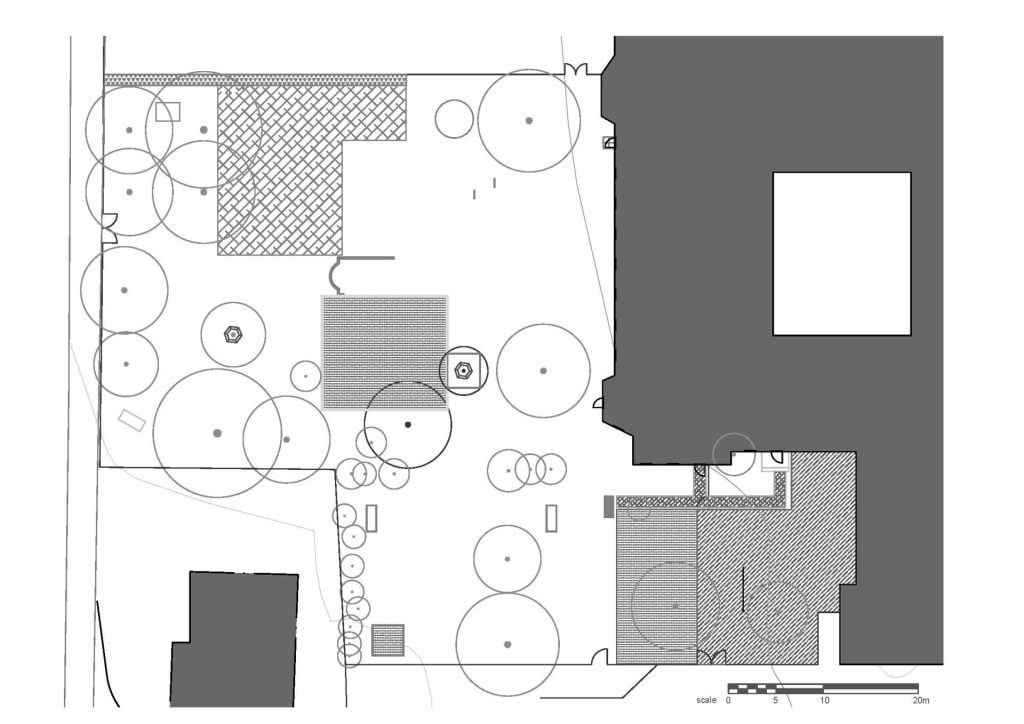


By August 2025, I had a design for the yard and a large group of people excited about the possibility, but unconvinced that it would be put in place for years to come.

With only three weeks in August before the beginning of school and a basically non-existent budget, we began to tackle building the playground, just two contractors, and myself to begin. The three of us got to work early every morning to set up grading markers, shovel recycled asphalt and removed play equipment to prepare for the work to come. When the contractors went home in the evening, I stayed to try to get as much as I could get done, often with my three boys in tow.


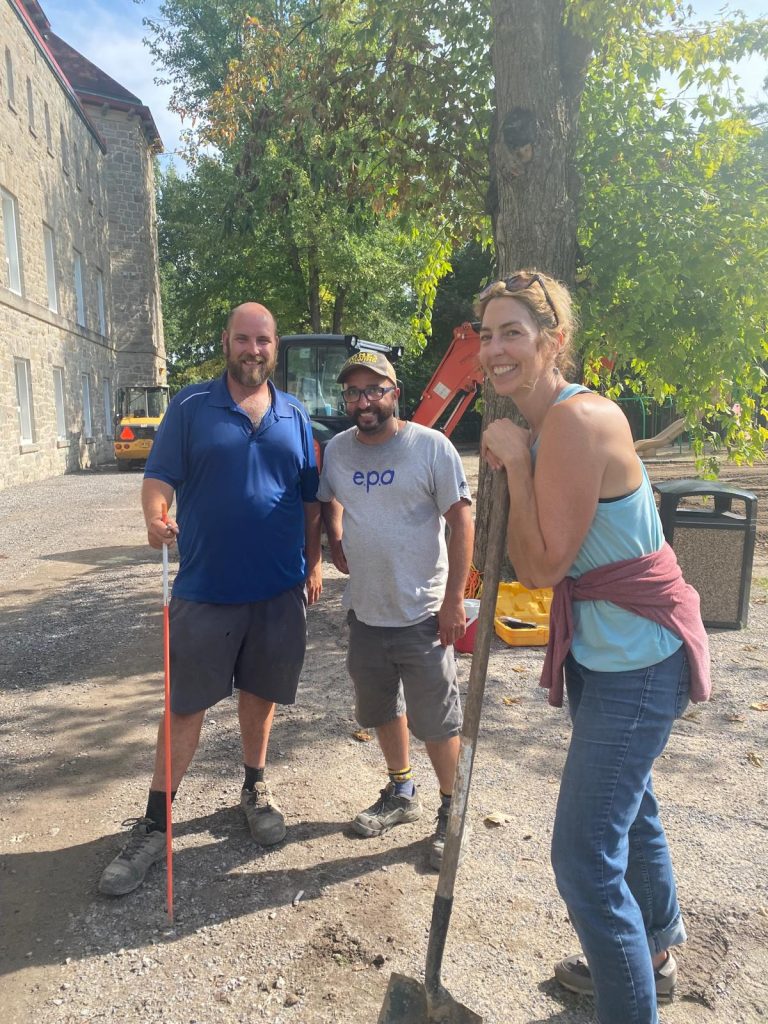

By the third day of work, teachers within the school began to take notice at the huge task at hand. They sent out pictures on social media with S.O.S calls for parents to help and slowly, day by day our team of workers grew. Before we knew it, what seemed impossible became possible as the plan began to take shape before our eyes.

Throughout all of this I had been speaking to someone who was an expert in native planting. He helped me with the planing of the native gardens that I hoped to include in the school yard- “the outdoor living laboratory” to me was one of the most important elements of the design, but the price for the plants he could provide were well beyond our budget. I convinced the school to find the money so that we could at least plant one of the garden areas. While working with this horticulturalist, he had mentioned a few times in passing this community group, “Pollinate Aylmer” that might like to donate some native plants to help the school. One of the members he mentioned was in fact a former Montessori teacher.

On one of the last days of work before school opened, I remember there were so many people in the yard, parents helping to paint the benches, some had just installed our new soccer field, others were raking and dumping donated wood chips in the designated garden areas. I looked up and saw this woman walking towards me with a big smile on her face. It was Dominique and she wanted to see how she could help.


And help she did. A few days later, she took me to meet Ioana and to check out her nursery, Localeaf. We hit it off immediately and it was decided, Localeaf would donate one plant for every child at the school to plant in the gardens. Montessori became one of the 12 David Suzuki Butterflyway gardens built in Aylmer in 2025. Courtesy of Localeaf and Pollinate Aylmer.


Pollinate Aylmer volunteers including Dominique helped me to prepare and put on workshops to teach each of the 12 classes, from pre-maternelle to grade 6 about the importance of pollinators and indigenous plants. Suddenly before I knew it, I too was a member of Pollinate Aylmer working along side with Dominique and Ioana.
This idea of sharing, sharing plants, sharing information, educating, is what connected us. It was as if Localeaf and Pollinate Aylmer had fallen from the sky, there in the last moments to help complete this final and most critical piece the plan, the environmental and educational component. And in offering this gift to the school, they also helped to anchor each child to the project. By simply planting their plant in their school yard, the project immediately became their own.
Localeaf and Pollinate Aylmer were there to help support part of their community with their open and generous hearts. What is even more beautiful is that every plant that we planted will flower and give us seeds that the children can soon collect and share, like the willows to help create new ecosystems in other school yards around our community.

Leave a Reply